In this article

What Happens in a Personal Training Assessment?

A good personal training assessment is about five minutes of simple movements: a single-leg stand, a bodyweight squat, arms overhead, a toe touch, a back bend and a single-leg bridge. It shows how your joints line up and where you compensate. It isn’t a diagnosis. It’s data, and it decides what your first program includes and leaves out.

Lewis came in for his first program. I’ve been getting people strong and injury-free for over 20 years, and this is how I want every program to start: watching someone move before writing a single set. Here’s what five minutes with Lewis told us, and how it changed his plan.

What is a trainer actually looking at?

Circles and lines. That’s it. When I watch someone move, I don’t see a person. I see a circle at the ankle, a circle at the knee, a circle at the hip, and the lines running between them. Train your eye to see that and the body starts telling you things.

Lewis stood on one leg first. His hips were crooked, with a diagonal running through his body where he was shifting across. His knee rotated in, which told me he wasn’t stabilising from his glute. His feet were working very hard. He’s got magnificent feet, you can see the space in them and he really grips the ground, which is great. But look higher and his shoulders sat on a slant. He was compensating somewhere.

On the other leg the same pattern showed up, just less of it. None of that is a diagnosis. It’s information, and it’s already shaping what his program will and won’t include.

Why does your goal change the assessment?

Because the answer changes the program. So before I go any further, I ask. Lewis wanted to get leaner, then maybe build some size. Mostly aesthetics. He used to have a bench press goal, but he’d dropped it because he didn’t think it was possible.

I’d put that goal straight back on the table. If bench press is the goal, I’d prioritise it, and the first thing I’d do in our session is watch him actually bench, so we define our terms before we chase a number. An assessment that ignores your goal is just a list of faults. One that starts with your goal becomes a plan.

Is a movement assessment a diagnosis?

No. It’s data collection. It works a bit like ChatGPT: I’m collecting information and context, then using it to build the program. As I watch, I’m flagging things in my head, not handing out labels.

That distinction matters. If something in the screen points to an injury that needs treating, that’s a job for a physio or a doctor. My job is to make sure the program fits the person in front of me instead of a template.

What did the squat, overhead and toe touch show?

In the bodyweight squat, his abs were an issue, and the first thing I flagged was thoracic extension: the ability to lift and open the upper back. He bends forward well. He isn’t strong coming back up into extension. That means upper back work.

Then arms overhead with a stick. He didn’t lock his elbows out. That’s never a coincidence, so I asked about injuries. Nothing recent, he said. Then: “Oh, I used to have a problem with my elbows.” A recurring soreness he’d written off as nothing. He didn’t have the range, and now we knew why.

Then the toe touch. It isn’t a flexibility test. It’s a test of how well you use your hips, and Lewis didn’t use his. So when we move to deadlifts, he starts with a trap bar deadlift to build the hinge.

Not everything was a problem. His back bend was phenomenal. A++. A good assessment tells you what’s working as clearly as what isn’t.

What did the single-leg bridge reveal?

The last test is on the floor. Bridge up as high as you can, take one leg off, hold, then switch. The difference between Lewis’s left and right sides was significant, and he felt it in his lower back.

Then the missing piece: he’d rolled his ankle two weeks earlier, and it was still a little sore. Your knee is a reflection of what’s happening below and above it. So the question becomes whether the hip is genuinely weak, or whether the sore ankle is sending pain signals back to the brain, and the brain is shutting off force on that side. My suspicion is the ankle. Two weeks in, it’s too early to call.

Should he squat? Not yet.

I’m not putting Lewis under a barbell to squat. With a hip shift that big from left to right, he’d be shifting way too much under the bar. He needs single-leg work first. If I did introduce squats, he’d wear a band around his knees to switch his glutes on. If the glutes are the problem, that solves it. If it’s the ankle, the problem is the pain signal, not the glute.

His first program is simple: two upper body days, two lower body days and one arm day, built around his bench goal, a trap bar hinge, upper back work and single-leg training. Nothing fancy. Just the right things, in the right order, for the body that walked in.

What should you expect at your first assessment?

You should move before you’re given a program, not just fill in a form. Expect to be asked about your goal and every old injury, including the ones you’ve written off. Expect the trainer to explain what they saw and how it changes your plan. If someone hands you a program without watching you move, it’s a template, and you’re paying for guesswork.

I’ve written more on why screening and programming belong together, and why your body works as an ecosystem, not a set of parts.

Before your first session anywhere, write down every injury you’ve ever had, even the ones you think don’t matter. Lewis’s elbow, the one he called “not a big injury”, explained exactly what I saw overhead. If you’re in Melbourne and want yours done properly, book a consultation at our Abbotsford studio.

Frequently asked questions

What happens in a personal training assessment?

You’ll do a handful of simple movements, such as a single-leg stand, a squat, arms overhead, a toe touch and a single-leg bridge, while the trainer watches how your joints line up. You’ll also be asked about your goal and your injury history. The result shapes what your first program includes and leaves out.

How long does a movement assessment take?

The movement screen itself takes about five minutes. Around it sits a conversation about your goal and your injury history, which matters just as much, because the answers change what the screen means.

Is a movement screen a diagnosis?

No. It’s data collection that a trainer uses to build a program for your body instead of a template. If something points to an injury that needs treatment, that’s a job for a physio or a doctor.

Why do trainers ask you to touch your toes?

Not to test flexibility. The toe touch shows how well you use your hips. If you don’t hinge from the hips, I’d build the hinge first with a trap bar deadlift before loading a barbell.

Should everyone squat in their first program?

No. If your hips shift noticeably from left to right, squatting under a barbell just loads the shift. Single-leg work comes first, and if squats come in early, a band around the knees helps switch the glutes on.

What should I tell a trainer before an assessment?

Your goal, and every injury you’ve had, including the ones you’ve written off. Lewis told me his old elbow soreness was nothing, and it explained why he couldn’t lock his arms out overhead.


You Might Also Like

It’s Finally Time to Get the Results
You’ve Always Wanted

Our private personal training studio in Abbotsford has everything you need to help you begin your fitness journey, transform your body and level up your fitness with a program, nutrition and supplement
plan created exclusively for you.

ARE YOU READY TO CHANGE YOUR BODY, HEALTH, AND ULTIMATELY YOUR LIFE?

Privacy Policy

Enterprise Fitness – Data collection and privacy policy
Thank you for visiting Enterprise Fitness, located in Abbotsford, Victoria.
We respect and protect the privacy of our website users and clients.
We act in accordance the Privacy Act 1988 (Cth).
This policy tells you how we collect and use information.

Data Collection

We only collect the Personal Information or additional information necessary to provide the service or goods you require. “Personal Information” means any information from which your identity is known or can be reasonably ascertained.

Website

We do not collect Personal Information about you when you visit our website.
You can use the website without telling us who you are or revealing other Personal Information.

If you send us a contact or feedback form we will collect Personal Information. If you contact us we will collect the email address you nominate and any other identifying information you provide, such as a name or phone number. You consent to us contacting you by providing that Personal Information.

Clients

We also collect Personal Information about you when you commence training with us as a client or when you make a purchase through our website. This may include additional information about you, such as your training history, health etc.

When we collect Personal Information or additional information we will treat it in accordance with our privacy policy.

Privacy policy

Access to your Personal Information or additional information is restricted to staff who need it to provide benefits or services to you.

We train our staff about the importance of confidentiality and maintaining the privacy and security of your information.

We do not share Personal Information with other entities unless you request us to, we ask you first or required by law to share.

We may share anonymised data, such as your server location, with other entities.

We collect this data by using Cookies (which are small files that are stored on your computer or mobile device). We use Cookies to record how many times you have visited our website and which parts of our website you have visited. Cookies can be used to provide you with information that you are interested in. By using our website, you consent to the processing of data about you by Google in the the way described in Google’s Privacy Policy.

If you ask us about an issue that needs to be dealt with by another entity, we will treat your Personal Information confidentially and request any other entity to do the same. We are not responsible for what other entities do however.

How we deal with complaints and requests

You may request access to Personal Information about you that we hold. You may ask us to correct your Personal Information if it is not accurate, up-to-date or incomplete.

You may make a complaint about our handling of your Personal Information.

To protect your privacy, we will require evidence of your identity before we can give you access to information about you or change it.

You can contact us by email, or send your request or complaint to the postal address below. We undertake to respond within 30 days.

If the request or complaint will take longer to resolve, we will provide you with a date by which we expect to respond.

Contact us
Privacy Manager
Enterprise Fitness
473 Victoria Street,
Abbotsford, 3067. 

Enterprise Fitness – Data collection and privacy policy

Enterprise Fitness – Data collection and privacy policy
Thank you for visiting Enterprise Fitness, located in Abbotsford, Victoria.
We respect and protect the privacy of our website users and clients.
We act in accordance the Privacy Act 1988 (Cth).
This policy tells you how we collect and use information.

Data Collection

We only collect the Personal Information or additional information necessary to provide the service or goods you require. “Personal Information” means any information from which your identity is known or can be reasonably ascertained.

Website

We do not collect Personal Information about you when you visit our website.
You can use the website without telling us who you are or revealing other Personal Information.

If you send us a contact or feedback form we will collect Personal Information. If you contact us we will collect the email address you nominate and any other identifying information you provide, such as a name or phone number. You consent to us contacting you by providing that Personal Information.

Clients

We also collect Personal Information about you when you commence training with us as a client or when you make a purchase through our website. This may include additional information about you, such as your training history, health etc.

When we collect Personal Information or additional information we will treat it in accordance with our privacy policy.

Privacy policy

Access to your Personal Information or additional information is restricted to staff who need it to provide benefits or services to you.

We train our staff about the importance of confidentiality and maintaining the privacy and security of your information.

We do not share Personal Information with other entities unless you request us to, we ask you first or required by law to share.

We may share anonymised data, such as your server location, with other entities.

We collect this data by using Cookies (which are small files that are stored on your computer or mobile device). We use Cookies to record how many times you have visited our website and which parts of our website you have visited. Cookies can be used to provide you with information that you are interested in. By using our website, you consent to the processing of data about you by Google in the the way described in Google’s Privacy Policy.

If you ask us about an issue that needs to be dealt with by another entity, we will treat your Personal Information confidentially and request any other entity to do the same. We are not responsible for what other entities do however.

How we deal with complaints and requests

You may request access to Personal Information about you that we hold. You may ask us to correct your Personal Information if it is not accurate, up-to-date or incomplete.

You may make a complaint about our handling of your Personal Information.

To protect your privacy, we will require evidence of your identity before we can give you access to information about you or change it.

You can contact us by email, or send your request or complaint to the postal address below. We undertake to respond within 30 days.

If the request or complaint will take longer to resolve, we will provide you with a date by which we expect to respond.

Contact us
Privacy Manager
Enterprise Fitness
473 Victoria Street
Abbotsford Victoria 3067
Australia

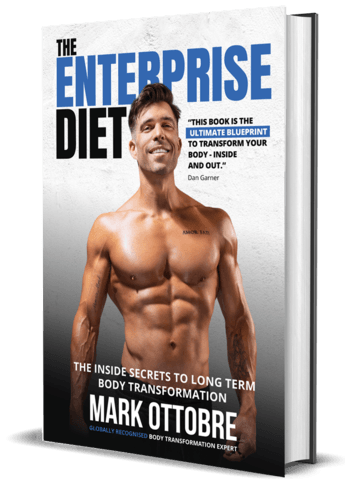
Download a FREE Chapter of the Enterprise Diet…

The Inside Secrets to Long Term Body Transformation

Get an exclusive look at the Enterprise Diet with a FREE chapter.

"*" indicates required fields

This field is for validation purposes and should be left unchanged.

We will only send you awesome stuff

Get your training volume results

Enter your details to see how your workout load adds up and optimise your training.

We will only send you awesome stuff!

Curious about how
your macros stack up?

Enter your details to see your personalised results and optimize your nutrition

We will only send you awesome stuff!

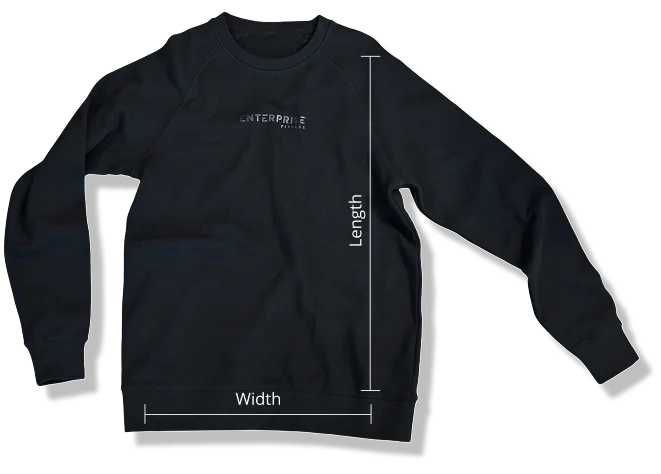
Men’s Crew Jumper Size Guide

Ensure your new outfit fits perfectly! Explore our size guide below to discover the ideal size for you.

Size Width
(cm)
Length
(cm)
XS 40 61
S 45 66
M 50 71
L 55 76
XL 60 81
XXL 65 86

Get a Free copy of The Enterprise Diet

Visit Enterprise Fitness studio to claim your free copy of the book!

3 Biggest Mistakes
Female Competitors Make

Get exclusive access to our video series

This field is for validation purposes and should be left unchanged.

We will only send you awesome stuff

Be Part of an Exceptional Team That Transforms Lives Through Industry-Leading Training & Coaching

This field is for validation purposes and should be left unchanged.

We will only send you awesome stuff

The Enterprise Fitness User Manual

Get an exclusive copy of the Enterprise Fitness User Manual

This field is for validation purposes and should be left unchanged.

We will only send you awesome stuff