In most cases, yes. Scoliosis, a disc bulge or an anterior pelvic tilt describes your structure, not your limits. Plenty of people lift heavy with all three. What causes the pain is usually a movement your body isn’t controlling, and a proper assessment finds that. If symptoms are new, severe or spreading, see a physio or doctor first.
“I’ve got scoliosis.” “I’ve got an L4/L5 disc bulge.” “My physio said I have anterior pelvic tilt.” We hear it in the studio every week, usually in the first five minutes. And it’s often said like a full stop, as if the diagnosis settles what that person can and can’t do.
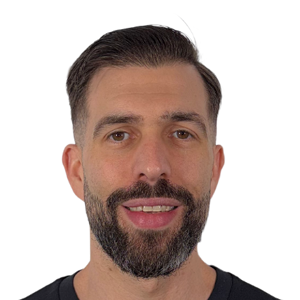
It doesn’t. I sat down with Shant, my go-to injury guy at Enterprise Fitness, to break down why a diagnosis is the start of the conversation, not the end of it.
Is your diagnosis actually the problem?
Usually not. Shant starts every assessment with one question: what’s your problem? Most people answer with a diagnosis. His reply is always the same: that’s a symptom. What is it you’re trying to do that you can’t?
Nobody books a session because life is perfect. They come because something is getting in the way. Their back hurts when they lean forward to pick up their kid. Their deadlift stalls 20 kilos short. Their shoulder pinches every time they reach overhead. That’s the real problem, and it’s the thing we can fix.
Think of it like driving down the freeway. The diagnosis is the rear-view mirror. It tells you something about where you’ve been. It doesn’t tell you where you’re going, and it certainly doesn’t steer the car.
Can you lift weights with scoliosis?
Yes, and plenty of the best athletes on the planet have. Usain Bolt has a pronounced scoliosis and became the fastest man alive. Lamar Gant, the first person to deadlift five times his own bodyweight, had a scoliosis so marked he used it to shorten himself to the bar. If a curved spine were a life sentence, neither of those records would exist.
Here’s the thing most people are never told: almost nobody has a perfectly straight spine. The textbook spine on the skeleton model is just that, a model. Your right hand isn’t a mirror image of your left. Your legs aren’t identical. You were born with some degree of curve, and your muscles grew up around it.
Shant puts it simply: structure doesn’t dictate function. It influences it. What dictates function is your nervous system, and how well your muscles are organised around that structure and controlled. When control breaks down, something else overcompensates, and that’s where the pain turns up.
What about a disc bulge or anterior pelvic tilt?
Same principle. When a client tells Shant they have an L4/L5 disc bulge, his answer is: “So do I. And I deadlifted last week.” The bulge may be real. It’s often not the reason they walked in the door.
Anterior pelvic tilt is an even clearer example. It’s an anatomical variant, a description of how your pelvis sits. It is not a disease. Plenty of strong, pain-free people have it.
None of this means ignoring a diagnosis. It means putting it in its place: one piece of information, not the whole story.
Why does the label stick so hard?
Because for some people it becomes their identity. “I have scoliosis” turns into the reason nothing has worked, the reason they can’t train properly, the reason their back always hurts. Part of them wants it confirmed, because then it isn’t their fault.
Shant doesn’t blame the client for this, and neither do I. Usually someone told them so often, and so seriously, that it stuck. Failure here is a system problem: the explanation they were given was a dead end.
So we ask for something simple. Humour us until the end of the session. Hold on to your thoughts about the scoliosis, let us do the work, and then you tell us whether the scoliosis was the problem. When someone feels the pain gone or the lift move freely in a single session, they stop saying “it’s my scoliosis” and start saying “I’ve got something to work on.” That shift is worth more than any explanation.
How does a proper assessment find the real problem?
It starts with conversation. What you tell us about when it hurts builds the hypothesis before we’ve tested a thing. “My back hurts when I reach down for the bar” and “my back hurts when I come up out of the deadlift” sound similar. They’re two different mechanisms, pointing to two different fixes.
Then we test, always starting from the centre. For an upper body problem, Shant starts at the neck, because you can’t separate the neck from the shoulders, just as you can’t separate the hips from the lower back. Look left, look right, tilt, look down, look up. Then the shoulders: arms overhead one at a time and together, out to the side, behind, rotating in and out.
The pieces start lining up. Discomfort when tilting the head, plus a shoulder that pinches every time the arm reaches forward, suggests the traps are overworking. And when one muscle overworks, it’s because something else is underperforming. A quick strength test often makes it obvious: one arm can push hard against Shant’s hand, the other can’t push past a single finger. Seeing that is usually the moment the client believes it.
I’ve walked through the full screen in what happens in a personal training assessment, and how this plays out with shoulders in why your shoulder hurts when you lift.
Activate a movement, not a muscle
This is the rule Shant teaches every trainer he mentors. You’re never just switching on a muscle. You’re training a movement, using the muscles that create it.
Take the lats. They pull your arm down, pull it back, rotate it in and draw your shoulder blade down. Four jobs. If the breakdown is in one of those jobs, generic lat work won’t fix it. You have to train the specific movement that’s missing, then put it straight back into the lift.
What happened when a 340kg deadlifter got stuck at 305?
Patrick is a powerlifter who deadlifted 340 kilos at under 100 kilos bodyweight. To move up a weight class, he added around 5 kilos of muscle and went to 105. He did everything right. Then his deadlift fell off a cliff. He couldn’t get 305 kilos off the floor.
Five kilos doesn’t sound like much. But 5 kilos of new muscle, much of it in his back, changed how his body sat over the bar. He’d lost the ability to pull his shoulder blades down with his lats as he started the lift. His back took the strain, and the power disappeared.
Shant’s process was the same as always: a 15-minute conversation, a movement assessment, a strength test, and watching him deadlift. The breakdown was clear. One exercise, focused on drawing the lats down. The cue: tuck your armpits into your underpants.
In that same session Patrick went from failing 305 to pulling 310 easily. Two weeks later he was doing 300 for three sets of four, back on track for an 800-kilo total at his next meet. He didn’t get stronger in one session. We removed the leak that was hiding the strength he already had.
What should you do if you’ve been given a diagnosis?
First, rule out anything that needs medical care. If your pain is new, severe, getting worse, spreading down an arm or leg, or comes with numbness, pins and needles or weakness, see a physio or doctor before you train.
If you’ve been carrying the label for months or years and it’s still running your training, stop asking what your diagnosis allows. Start asking what movement is breaking down, and get it assessed properly. Here’s the rule: treat your diagnosis as information, never as an identity.
That’s how we work with every client at our Abbotsford studio in Melbourne. If a diagnosis has been holding you back, book a consultation and humour us until the end of the session.
Frequently asked questions
Can you lift weights with scoliosis?
In most cases, yes. Scoliosis describes the shape of your spine, not what you can do, and elite athletes such as Usain Bolt and record-setting deadlifter Lamar Gant have had it. Training focuses on controlling movement around your structure. See a doctor first if your symptoms are new or severe.
Is it safe to deadlift with a disc bulge?
Many people deadlift with a disc bulge, including clinicians who treat them. The bulge is often not the cause of the problem that brings someone in. Get assessed to find the movement that’s breaking down, and see a physio or doctor first if pain spreads into a leg or comes with numbness or weakness.
Is anterior pelvic tilt a problem?
Not on its own. Anterior pelvic tilt is an anatomical variant, a description of how your pelvis sits, not a disease. Plenty of strong, pain-free people have it.
Why do I still have pain if my diagnosis isn’t the cause?
Usually because something in a movement isn’t being controlled, so another muscle overworks to compensate. A proper assessment starts with when and how it hurts, then tests movement and strength to find the breakdown.
What does activating a movement rather than a muscle mean?
Most muscles have several jobs. The lats, for example, pull your arm down, back and inward and draw your shoulder blade down. Good coaching trains the specific movement that’s breaking down, then puts it straight back into the full lift.